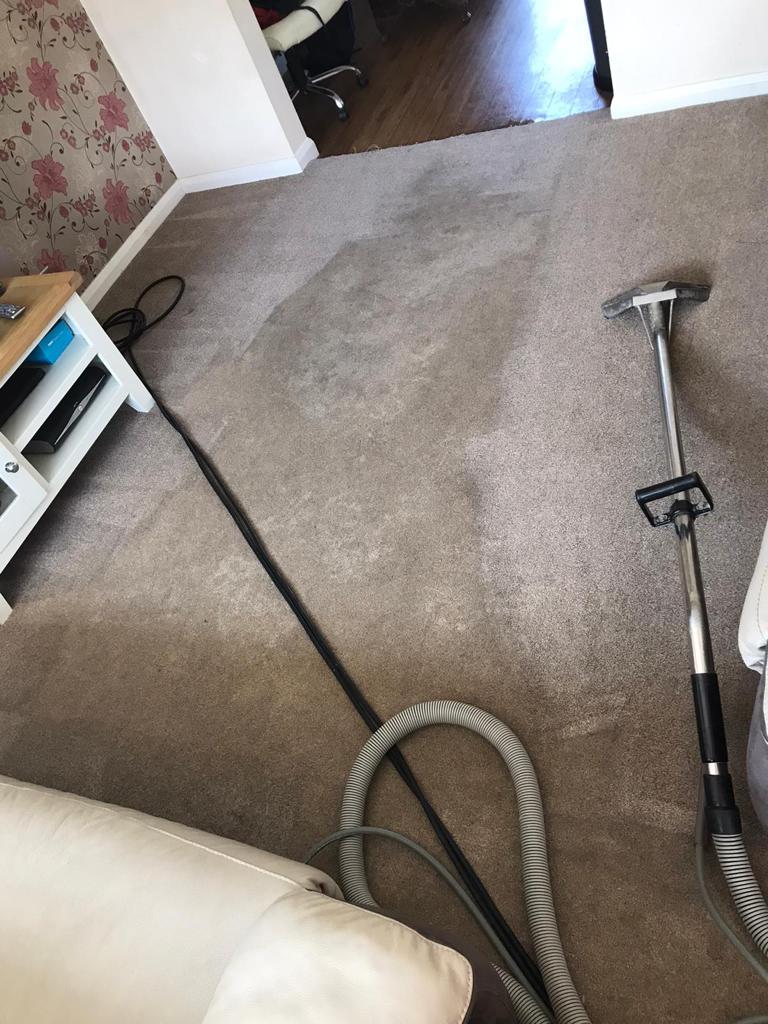
Domestic carpets are exposed to continual use. Foot traffic, outdoor dirt, dust, food crumbs, accidental spills and general household activity can gradually leave soil within the carpet fibres, even when floors are vacuumed regularly. Because this build-up happens slowly, carpets can begin to look dull long before homeowners consider them particularly dirty.
Professional carpet cleaning provides a deeper level of cleaning than routine vacuuming, but there is no single cleaning interval that is right for every household. A carpeted hallway used throughout the day will experience very different conditions from a spare bedroom that receives occasional foot traffic.
For homeowners in Canterbury, Kent, the most useful approach is to base professional cleaning on the condition and use of individual carpets. Understanding the factors that influence soiling can help determine when professional attention is worthwhile without cleaning unnecessarily or waiting until carpets become heavily soiled.
What Determines How Often Domestic Carpets Need Professional Cleaning?
The frequency of professional carpet cleaning depends on how quickly soil accumulates and how the carpet is used.
Important factors include:
- The amount of daily foot traffic
- Whether the carpet is near an entrance
- The number of people using the property
- Whether outdoor footwear is worn indoors
- The presence of children or pets
- The frequency of accidental spills
- How regularly the carpet is vacuumed
- The type and construction of the carpet
- Whether visible traffic lanes are developing
- How the individual room is used
- The amount of soil transferred from outside
- The overall condition of the carpet fibres
Rather than treating every carpet identically, these factors provide a more useful guide to when professional cleaning is appropriate.
There Is No Single Cleaning Schedule for Every Home
Homeowners often want to know whether carpets should be professionally cleaned every six months, every year or at another fixed interval.
In reality, the appropriate frequency varies considerably.
A busy household may find that frequently used carpets require professional attention sooner, while a quieter property may experience much slower soil accumulation.
Even carpets within the same house can have different requirements.
Condition, usage and visible soiling are therefore more useful indicators than following a rigid calendar.
High-Traffic Areas Usually Need Cleaning More Frequently
Foot traffic has a major influence on carpet condition.
Every time somebody walks across a carpet, small amounts of soil can be transferred to the fibres.
Where the same route is used repeatedly, this contamination becomes concentrated.
High-traffic carpets may therefore develop visible darkening or dullness before other areas.
Professional cleaning can remove accumulated soil that routine vacuuming is no longer extracting effectively.
Hallway Carpets Experience Particularly Heavy Use
Hallways are often among the busiest carpeted areas within a property.
People repeatedly walk along the same relatively narrow route when moving between rooms.
Where the hallway connects with an entrance, outdoor dirt can also be introduced directly onto the carpet.
Over time, the central walking area may begin looking noticeably different from sections close to the edges.
This contrast can be a useful indication that deeper professional cleaning is becoming appropriate.
Carpeted Stairs Can Soil Quickly
Stairs experience concentrated foot traffic because people repeatedly step on similar sections of each tread.
The centre and front of the step can therefore become visibly darker than less frequently contacted areas.
Stairs can also be more difficult to vacuum thoroughly than an open floor.
Edges, corners and the transition between the tread and riser can retain material that ordinary vacuuming may not remove easily.
For these reasons, carpeted stairs may benefit from professional cleaning sooner than quieter rooms.
Living Room Carpets Can Develop Defined Traffic Routes
Furniture influences how people move through a living room.
Sofas, tables and other items naturally channel foot traffic through particular routes.
These frequently used sections may gradually accumulate more soil than protected areas.
The difference can become especially obvious if furniture is rearranged.
Professional cleaning can help remove accumulated contamination and create a more consistent appearance across the room, provided the visible difference is caused by soil rather than permanent fibre wear.
Bedrooms Often Need Less Frequent Attention
Bedroom carpets can experience considerably less foot traffic than hallways, stairs and living areas.
Where outdoor footwear is rarely worn and regular vacuuming is maintained, significant soiling may develop more slowly.
This is why cleaning every carpet in the home at exactly the same interval is not always necessary.
A bedroom carpet can be assessed according to its own condition rather than automatically being cleaned simply because a busier area requires attention.
Spare Bedrooms Can Have Different Cleaning Requirements Again
A spare bedroom used only occasionally may remain relatively clean for extended periods.
Low foot traffic means less outdoor dirt and general household soil is transferred to the carpet.
Routine vacuuming may therefore be sufficient for longer between professional cleans.
This demonstrates why room usage is such an important consideration.
Professional cleaning should respond to genuine need rather than treating all domestic carpets as though they experience identical conditions.
Regular Vacuuming Remains Essential
Professional carpet cleaning does not replace vacuuming.
Regular vacuuming removes loose dry soil before it has the opportunity to become more deeply established within the fibres.
Particular attention should be given to high-traffic routes, entrances and stairs.
A consistent vacuuming routine can help maintain the carpet between professional cleans.
The most effective maintenance approach generally combines regular household care with deeper cleaning when the carpet’s condition indicates it is needed.
Vacuuming Cannot Remove Everything
Even effective vacuuming has limitations.
Fine soil can settle further into the carpet pile, while spills and other contamination may attach more firmly to fibres.
Over time, the carpet can therefore begin looking dull despite frequent vacuuming.
Professional cleaning uses methods designed to remove more established contamination from within suitable carpet fibres.
This provides a different level of cleaning rather than simply repeating what a domestic vacuum cleaner already does.
Outdoor Dirt Can Spread Further Than the Entrance
Soil brought into a property does not necessarily remain beside the door.
Particles can be carried further across carpeted floors on footwear.
As household members move between rooms, some of this material can gradually spread throughout frequently used areas.
Keeping entrance sections well maintained can reduce the amount of contamination transferred deeper into the property.
Where carpets near entrances are becoming noticeably soiled, they may need professional cleaning sooner than more protected areas.
Wearing Outdoor Footwear Indoors Can Affect Cleaning Frequency
Household routines influence how quickly carpets become dirty.
Where outdoor shoes are regularly worn indoors, more soil is likely to reach carpet fibres.
During wet conditions, footwear can introduce additional moisture and dirt.
Homes where shoes are normally removed at the entrance may experience a slower rate of visible carpet soiling.
This is another reason why a standard cleaning interval cannot accurately represent every household.
Children Can Increase Everyday Carpet Use
Family homes can place additional demands on carpeted floors.
Children may move frequently between different rooms and outdoor spaces, while everyday activities can increase the possibility of crumbs, dirt and accidental spills reaching the carpet.
This does not mean every home with children requires the same cleaning schedule.
The condition of the carpet should remain the guide.
Where frequently used areas begin showing significant soil despite normal maintenance, professional cleaning may be worthwhile.
Pets Can Influence Carpet Maintenance
Pets can introduce additional hair, fine soil and outdoor material into carpeted areas.
Rooms where pets spend substantial amounts of time may therefore require more frequent vacuuming and potentially earlier professional cleaning.
The appropriate frequency still depends on the individual household.
Rather than automatically following a fixed timetable, homeowners can monitor how quickly contamination becomes established and arrange deeper cleaning when routine care is no longer producing the desired result.
Visible Dirt Is Not the Only Sign That Cleaning May Be Due
Carpets do not need to look extremely dirty before professional cleaning becomes useful.
Soil accumulation is gradual.
Homeowners see their carpets every day, making subtle changes in colour and appearance difficult to notice.
A carpet may slowly become duller without developing one dramatic stain.
Comparing heavily used sections with protected areas can sometimes reveal how much the appearance has changed.
Traffic Lanes Are a Useful Warning Sign
Darkened walking routes are among the clearest indications of accumulated carpet soil.
These often appear through hallways, around furniture or across the centre of rooms.
Professional cleaning can improve traffic lanes where soil is responsible for the discolouration.
However, heavily used fibres may also have undergone physical wear.
Where both soiling and wear are present, cleaning can remove appropriate contamination but may not restore the carpet to the appearance of an unused section.
Soil and Permanent Wear Should Be Distinguished
Not every dark or flattened area is simply dirty.
Repeated foot traffic can physically alter carpet fibres over time.
Fibres may become flattened, abraded or otherwise changed through prolonged use.
Professional cleaning cannot replace material that has worn away or completely reverse permanent fibre damage.
This distinction is important because it helps homeowners maintain realistic expectations about what cleaning can achieve.
Professional Cleaning Cannot Make a Worn Carpet New Again
The purpose of professional carpet cleaning is to remove appropriate contamination.
It is not a repair process.
Where a carpet is fundamentally sound but heavily soiled, cleaning can make a noticeable improvement.
Where the fibres have suffered significant physical deterioration, some visual differences may remain after the dirt has been removed.
A professional assessment can help identify these conditions before cleaning begins.
Do Not Wait Until the Carpet Is Extremely Dirty
Waiting until a carpet is heavily contaminated is not necessarily the best maintenance approach.
By that stage, substantial amounts of soil may have accumulated within frequently used areas.
Cleaning when the carpet begins showing clear signs of established soiling can be more practical.
This keeps professional cleaning focused on maintenance rather than allowing contamination to build indefinitely.
The correct timing depends on how quickly the individual carpet becomes soiled.
Fine Grit Can Become Embedded Within the Carpet
Small particles of dry soil can work down between carpet fibres.
Repeated foot traffic can move these particles further into the pile.
Although regular vacuuming removes much of the loose material, some contamination may remain.
Professional cleaning can help remove established soil and improve the appearance of carpets that have gradually become dull through everyday use.
This is particularly relevant in high-traffic areas where contamination is repeatedly introduced.
Spills Can Change the Cleaning Schedule
A carpet that would not normally require professional cleaning for some time may need earlier attention following a significant spill.
The appropriate response depends on the substance involved and the carpet material.
Fresh spills should be addressed promptly using a suitable method.
Repeatedly applying different household cleaning products without understanding how they interact with the carpet can sometimes make the affected area more difficult to manage.
Where a mark persists, professional attention may be appropriate.
Rubbing a Spill Can Make the Affected Area Larger
When a spill occurs, aggressive rubbing is not always helpful.
It can spread contamination across a larger section of carpet and work material further into the fibres.
The appropriate immediate response depends on the type of spill and carpet construction.
Where ordinary careful treatment does not resolve the problem, continuing to experiment with stronger products may not produce a better result.
Professional assessment can determine an appropriate cleaning approach.
Stains and General Soiling Are Different Problems
One obvious stain can attract attention even when the remainder of the carpet is relatively clean.
Conversely, a carpet can contain no major stains while being generally dull from accumulated traffic soil.
These situations should be considered differently.
A stain may require focused attention, while widespread soil may indicate that deeper whole-area cleaning is appropriate.
The absence of individual stains should therefore not be used as the only measure of carpet cleanliness.
Reappearing Marks Can Need Further Investigation
Sometimes a mark appears to disappear during cleaning but becomes visible again afterwards.
Repeated surface treatment may not resolve the underlying issue.
Where a mark continually returns, professional assessment can help determine what type of contamination is present and how the carpet should be treated.
This can be more appropriate than repeatedly adding different products to the same section.
Household Cleaning Products Should Be Used With Care
More cleaning solution does not necessarily produce a cleaner carpet.
Using excessive quantities or unsuitable products can leave residues within the fibres.
These residues may affect the feel or appearance of the carpet and can sometimes contribute to further soil attraction.
Different carpet materials also have different cleaning requirements.
Professional carpet cleaning takes the carpet construction into account rather than relying on one general-purpose treatment for every surface.
Carpet Colour Can Hide or Highlight Soil
Light-coloured carpets may show tracked-in dirt relatively quickly.
Darker or patterned carpets can sometimes disguise gradual contamination for longer.
This does not mean that a darker carpet experiencing heavy foot traffic is necessarily cleaner.
Cleaning decisions should therefore consider how the carpet is used as well as how visibly dirty it appears.
A carpet that conceals soil effectively may still benefit from professional cleaning when significant contamination has accumulated.
Carpet Construction Matters
Domestic carpets vary in their fibres, pile and construction.
These characteristics influence both how contamination becomes established and how the carpet should be cleaned.
Professional cleaning should therefore be adapted to the individual floor covering.
Assessment can also identify existing wear, staining and other conditions that may influence the expected result.
This is more appropriate than assuming every domestic carpet should receive exactly the same treatment.
Furniture Can Conceal the Difference Between Clean and Soiled Carpet
Areas beneath large pieces of furniture are protected from regular foot traffic.
When furniture is moved, these sections may look noticeably different from the exposed carpet.
Some of this contrast may be caused by soil accumulation.
Other differences may relate to fibre condition and general ageing.
Professional cleaning can remove appropriate contamination, but it cannot guarantee that every difference between covered and exposed areas will disappear completely.
Moving Furniture Can Reveal Traffic Patterns
Changing a room layout can make previously unnoticed soiling much more obvious.
Walking routes that developed around the old furniture arrangement may appear as darker sections.
Professional cleaning can help improve these areas where accumulated soil is responsible.
This can also be a useful time to assess the overall condition of the carpet rather than concentrating only on one visible route.
Cleaning Frequency Can Change as Household Use Changes
The same carpet may not always require the same maintenance schedule.
A spare room may become a regularly used bedroom or workspace.
Furniture changes may create different walking routes.
The number of occupants or everyday household routines may also change.
Cleaning frequency should therefore remain flexible.
The carpet’s current use provides more meaningful information than a schedule established several years earlier.
Seasonal Conditions Can Affect Carpet Soiling
The amount of outdoor material entering a home can vary throughout the year.
Wet or muddy conditions can increase the amount of contamination carried indoors on footwear.
Entrance areas and frequently used routes may consequently become soiled more quickly at certain times.
This does not mean carpets need cleaning after every period of poor weather.
It simply reinforces the importance of monitoring actual condition rather than relying exclusively on a fixed interval.
Professional Cleaning Is Not Only for Special Occasions
Some homeowners arrange carpet cleaning only when preparing the home for visitors or another particular event.
Although this can certainly be a useful time to have carpets cleaned, professional cleaning also has a role in ordinary maintenance.
Allowing traffic soil to build continuously between occasional special events may leave carpets looking increasingly tired.
Cleaning according to condition provides a more practical approach.
Routine Cleaning Can Help Maintain Carpet Appearance
Removing accumulated soil before it becomes extremely established can help carpets remain more presentable.
This is particularly relevant in high-traffic areas where gradual dulling can become normalised.
Professional cleaning cannot prevent ordinary wear, but it can remove contamination that contributes to a tired appearance.
Combined with vacuuming and sensible spill management, this forms part of a balanced carpet maintenance routine.
Recently Cleaned Carpets Still Require Vacuuming
A professional clean does not create a maintenance-free carpet.
As soon as normal household use resumes, loose dust and soil will gradually begin accumulating again.
Regular vacuuming should therefore continue.
Keeping on top of routine maintenance can help preserve the cleaned appearance and reduce unnecessary build-up before the next professional service is required.
Not Every Room Needs to Be Cleaned at the Same Time
A household may contain a heavily used hallway, moderately used living room and several lightly used bedrooms.
There is no practical reason to assume all of these carpets must always receive identical treatment.
Professional cleaning can be focused on the areas that genuinely require it.
Other rooms can be assessed separately and cleaned when their condition warrants attention.
This targeted approach reflects how carpets are actually used.
Whole-Home Carpet Cleaning Can Still Be Appropriate
There are also circumstances where several rooms have reached a similar level of soiling.
Where carpeted areas experience consistent use throughout the property, cleaning them together may provide a more uniform result.
The decision should still be based on condition.
The important point is that whole-home cleaning should be chosen because the carpets require it, rather than simply because one individual area has become dirty.
Cleaning Too Frequently Is Not Necessary
Professional carpet cleaning is valuable when it serves a genuine maintenance purpose.
Cleaning a lightly used carpet repeatedly when it remains in good condition is unlikely to provide meaningful additional benefit.
A sensible approach is to monitor usage and appearance.
This allows professional cleaning to be arranged when accumulated soil justifies deeper treatment.
The goal is appropriate care rather than following an unnecessarily intensive schedule.
Waiting Too Long Can Allow Heavy Soiling to Develop
The opposite approach can also be unhelpful.
If professional cleaning is postponed indefinitely, traffic lanes and widespread dullness can become increasingly established.
At this stage, physical wear may also be more noticeable.
Cleaning at a sensible point between these extremes allows accumulated soil to be addressed without waiting for the carpet to become heavily contaminated.
Signs That Professional Carpet Cleaning May Be Due
Several practical indicators can suggest that deeper cleaning is worthwhile.
Traffic lanes may be becoming more obvious, colours may appear duller, or previously minor marks may be more noticeable.
Vacuuming may no longer create the same visual improvement.
Frequently used sections may also look significantly different from protected areas.
These signs provide a more useful guide than relying entirely on the number of months since the previous professional clean.
Professional Assessment Helps Set Realistic Expectations
Before cleaning, it is useful to understand the difference between contamination and permanent change.
Some dark areas may respond very well because they are largely caused by soil.
Others may remain slightly different because the fibres have experienced substantial wear.
Professional carpet cleaners can assess the floor covering, consider its construction and identify areas where expectations should remain realistic.
The aim is effective cleaning rather than making unrealistic promises about existing damage.
Domestic Carpet Cleaning in Canterbury, Kent
For homeowners in Canterbury, Kent, professional carpet cleaning can form an important part of maintaining frequently used carpets.
At Canterbury Carpet Cleaners, we can assess the condition, construction and level of soiling within individual carpeted areas before selecting an appropriate cleaning approach.
Busy hallways, stairs and living spaces may benefit from attention sooner than lightly used bedrooms, while spills or established marks can sometimes change when cleaning is required.
Rather than relying on one rigid timetable, the aim is to provide professional cleaning when it will genuinely benefit the condition and appearance of the carpet.
Conclusion
There is no universal timetable that determines exactly how often domestic carpets should be professionally cleaned. The appropriate frequency depends on foot traffic, household routines, pets, children, outdoor dirt, spills, carpet construction and the effectiveness of regular vacuuming.
High-traffic areas such as hallways, stairs and frequently used living rooms will generally show accumulated soil sooner than quieter bedrooms and spare rooms. Signs such as visible traffic lanes, general dullness, established marks and reduced improvement after vacuuming can indicate that professional cleaning is becoming worthwhile.
Professional carpet cleaning can remove accumulated soil and improve the appearance of suitable carpets, but it cannot reverse permanent fibre wear or repair physical damage. For this reason, condition and realistic expectations should always guide the service.
If the carpets in your home in Canterbury, Kent, are beginning to look tired despite regular vacuuming, contact Canterbury Carpet Cleaners. We can assess the areas that need attention and provide professional domestic carpet cleaning suited to their condition and level of use.
Call us on: 01227 532 792
Click here to find out more about Canterbury Carpet Cleaners
Click here to complete our contact form and see how we can help with your carpet needs.